Archive for Sourdough Starter
Sourdough Recipes For Ya
Posted by: | CommentsMaking bread from a sourdough starter is a little tricky to get used to! Here’s an idea to try if you weren’t entirely pleased with how your sourdough bread turned out:
While following these basic steps to creating sourdough bread…in the morning after you add water, flour and salt…instead of placing the kneaded dough in a bowl to raise all day…then shaping the dough into loaves…simply shape the dough into loaves immediately after kneading it in the morning. SKIP the part where it raises in the bowl. I know this sounds weird…but try it. Since your starter has been fed and allowed to sit out all night…the yeast in it is already activated and a double rising the next day may not be necessary!
The part I like best about this tip is that it saves TIME! My friend, Anne, who has more sourdough experience than I have does it this way every time and her bread turns out beautiful.
I have yet to experiment much with my sourdough starter with recipes other than bread. However…a couple of you have been kind enough to send me some of your recipes…so I’m sharing those now.
Here are a couple of Heidi’s recipes:
Sourdough Pancakes
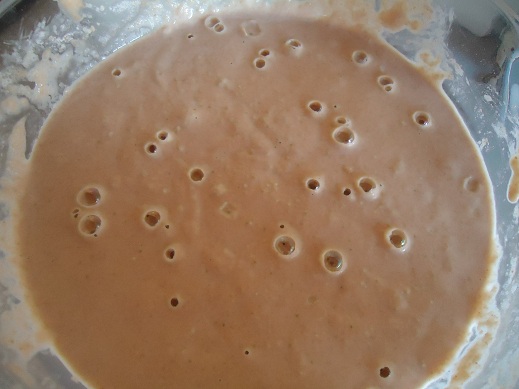
The night before your breakfast, place the 2-3 cups of starter in a medium size mixing bowl. Add 2 cups warm water and 2 cups flour. Beat well and set in a warm place, free from draft, to develop overnight. In the morning the batter will have gained 1/2 again its bulk and be covered with air bubbles. It will have a pleasant yeasty odor.
Set aside one cup of sourdough starter in the refrigerator jar for your starter the next time. To remaining sponge add:
1 or 2 eggs
1 tsp. soda
1 tsp. salt
1 Tbl. sugar
Beat with a fork and blend in all ingredients. Add 2 Tbl melted fat. Bake on a hot griddle. Turn once. Serve.
Sourdough Waffles
Set the sponge as for pancakes. Make it slightly thicker. Let it stand overnight. Remove the usual one cup of starter for next time, and to the remaining sponge add:
1 tsp. salt
2 Tbl. sugar
1 tsp. soda
2 eggs
1.4 cup melted fat
Mix well and add fat just before baking. Bake according to directions that came with the waffle iron.
Here are some of Jill’s recipes:
Sourdough Waffles
In a large bowl put 1 cup of sourdough starter, add 2 cups of warm water and 3 cups of flour. Beat until smooth, cover and let stand overnight. The next morning beat in 3 eggs, ½ cup of oil, 2 T honey,or Rapadura, 1 tsp of salt. Stir in a small cup put ¼ t. baking soda in 1 T water and swirl around quickly and then pour right into the batter. Let stand 30 minutes and then use in a waffle iron. These are fabulous!
Sourdough Pancakes
The night before put 1 cup of flour, 1 cup of sourdough starter and 1 cup of milk. Hand mix well and cover and let stand overnight. The next morning add 2 beaten eggs, 1 tablespoon of honey,or Rapadura 1 tsp of salt, 1 tsp of soda and 3 T oil.
Mix together and cook like regular pancakes. These are very yummy.
Fried Cakes (Jill says, “This is one of our favorite recipes. We don’t fry often but when we do these are so disgustingly good with homemade jam or honey dipped in.”)
Mix 1 cup of flour, 2 tsp of baking powder, 1 tsp of salt, 1 tsp of baking soda, 2 T honey or rapadura. Then add 2 cups of starter. Add enough flour to roll in a ball. Roll it out to about ½ inch thick and then cut into pieces and shapes. They should be smaller than a biscuit, probably about half the size of a biscuit. We like making funny shapes. Fry in hot oil and then put on paper towels to cool.
Thanks Heidi and Jill for helping us out with more sourdough recipe ideas!
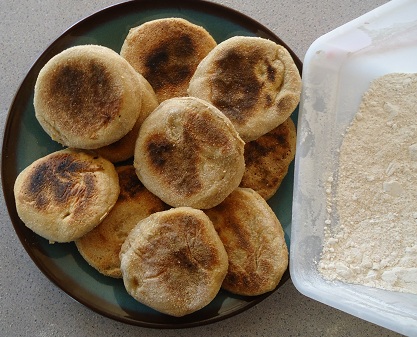
Jill also sent me her Sourdough English Muffin recipe which I will share soon!
I also have a recipe that I will share soon for making sourdough pancakes just by soaking flour in buttermilk overnight (you don’t have to use a sourdough starter). YUM!
Yay for all kinds of new recipes!
——————————————–
Visit Tammy’s Recipes for more kitchen tips!
Sourdough Starter: Day 8…Time to Make Bread!
Posted by: | CommentsAfter seven days of feeding your sourdough starter with water and flour…it is fermented and ready to make into bread!
Now, keep in mind that this method of making bread is an old fashioned method. It isn’t quick. (Neither is it difficult.) From start to finish, the bread takes anywhere from 8 to 24 hours. Most of those hours are spend just waiting for the dough to rise.
I happen to like the pace of this bread making. Slow and easy wins the race. AND, the nutritional benefits?! Because the bread is fermented, all of the difficult-to-digest phytates from the grain are broken down making this bread GREAT for your digestion! This is the best, most healthy bread you can make.
Okay, so are you ready?

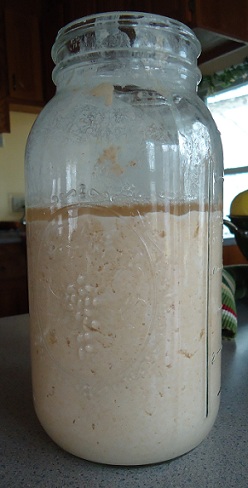
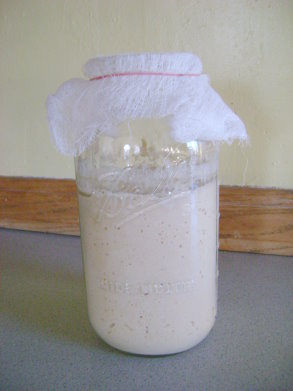
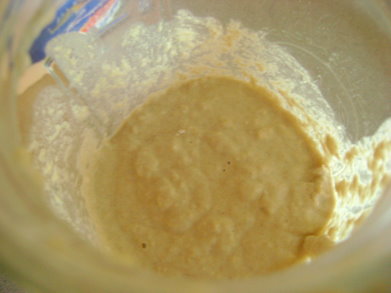
Here is what my starter looked like on the eighth morning.

Put about two to three cups of starter into a quart jar, seal it with a lid and put it into your refrigerator for future use.
Here’s what you’ll need to make your bread:
3-4 cups sourdough starter
2 t. sea salt
1 1/2 cups cold water
4-8 cups whole wheat, rye, or spelt flour (if your flour is freshly ground, make sure it has had a chance to cool)

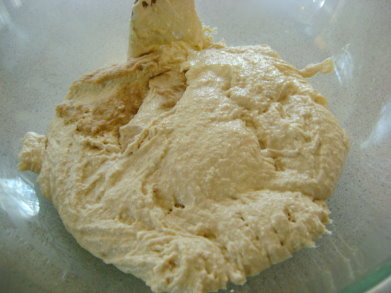
Pour the remaining starter into a large clean glass bowl. (I had about 3 cups of starter in my bowl to start with.)

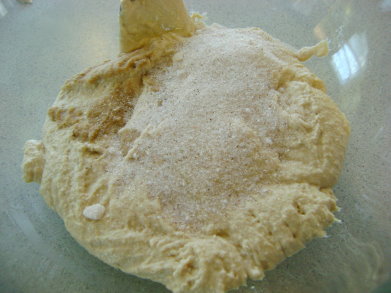
Add 2 teaspoons of sea salt to the starter.

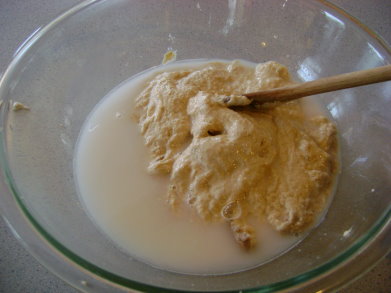
Pour in 1 1/2 cups of cold water and stir until the salt it disolved.

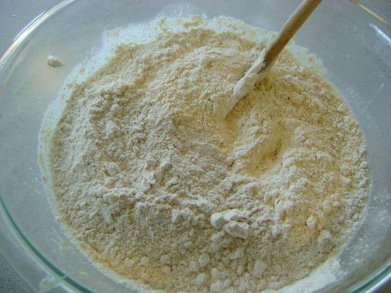
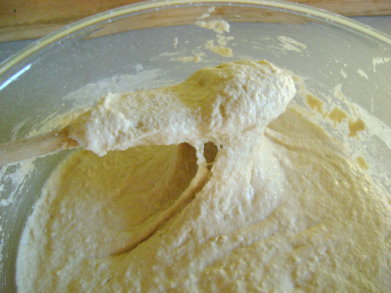
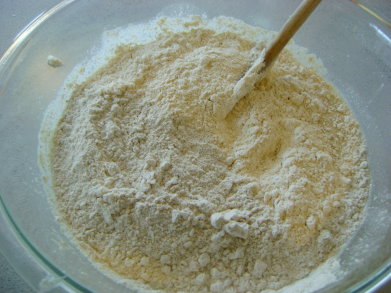
Slowly stir in flour, two cups at a time. For this batch, I only used about five cups. This is because my starter was not very liquidy to begin with. Remember, the more soupy your starter, the more sour your bread. I was trying to create a starter that was a little on the thicker side.

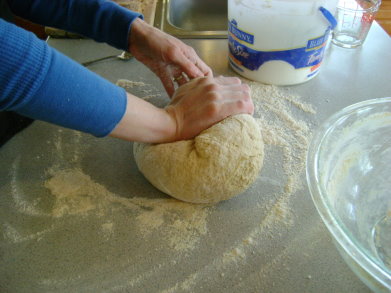
Work in the flour on a clean surface until your dough is knead-able. Knead your dough for 8-10 minutes (or until you think you might pass out). Hey, how do you think we breadmakers get these amazingly buff arm muscles anyway? :)
(You can also knead your dough in a machine if you’d rather!)

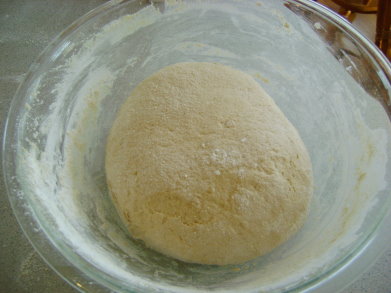
Place your well kneaded dough back into your bowl.

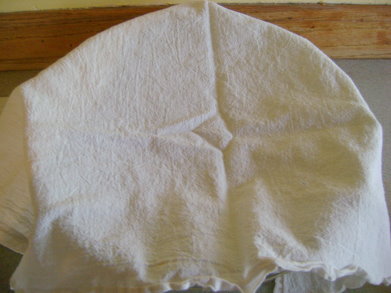
Cover your bowl with a clean cloth and set it on your counter. Now, the natural yeast in your sourdough will go to work to make the dough rise…and all the healthy bacteria in the dough will work to break down the phytates and release the nutrients!

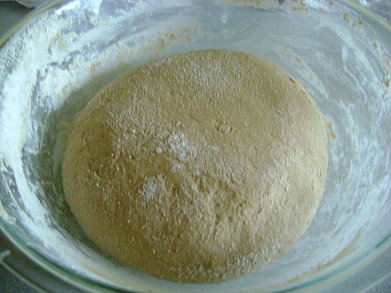
I put my dough in the bowl ready to start rising at 9:00 a.m. By 3 p.m. it had risen to about double. So this time, it took six hours for my dough to rise. In the summer you may find that it takes less time.

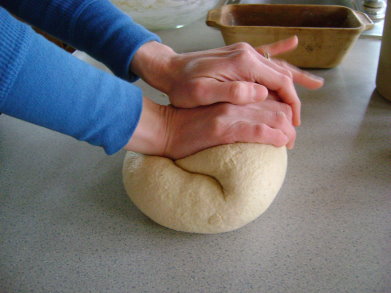
Knead your dough for a good solid five minutes. (Yay, another upper body workout.)

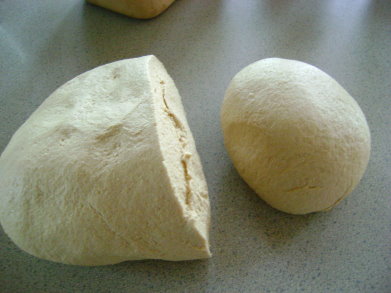
Divide your dough into three sections, using a knife to slice. (Yes, I realize this picture only shows you two sections. The picture is to show you the slice. Focus on the slice.)

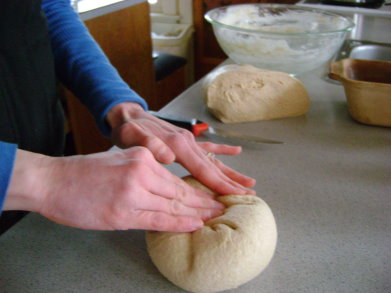
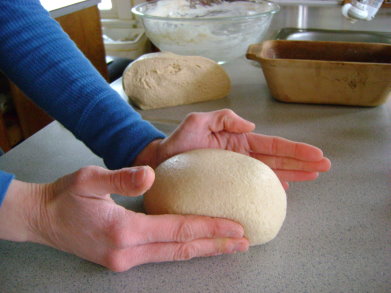
Shape your dough into balls.

Good job Asa , taking time away from your math assignment to come take pictures of your mother’s hands with the dough. Oh wait, I think I was blinking in that one.

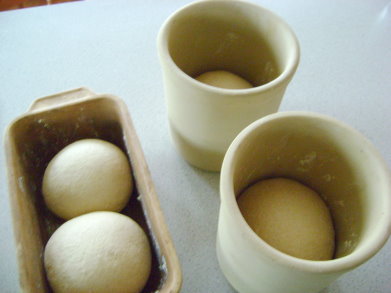
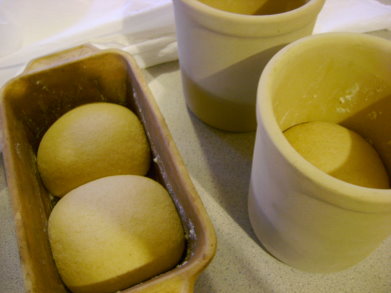
I prefer to use my round loaf pans from Pampered Chef. When I use my regular loaf pans, you’ll notice that instead of making one long loaf to fit the pan, I shape two balls and set them side by side into the pan. The sourdough rises much better this way. When you are deciding on the size of dough for your pan, think small. If you have too much dough in your pan, the bread not rise well and it will be very heavy.

Because the sourdough has been sitting and working all day, the natural yeast in it has been activated so that the bread rising in the pans will not take as long as the initial rising of the dough. In about three hours, my bread was ready to go into the oven.
Bake your bread in a 350 degree oven for one hour or until the bread sounds hollow when you thump it.

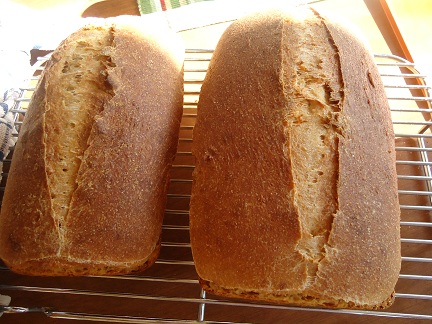
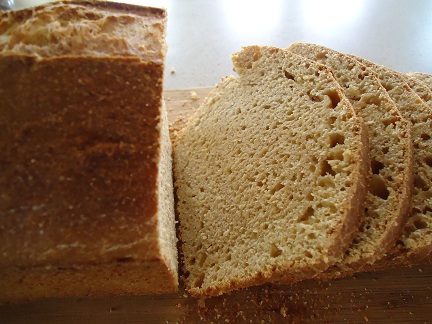
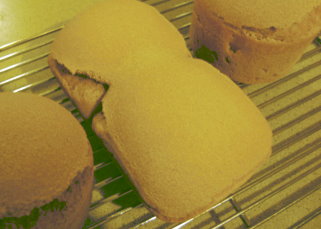
I always have a hard time getting a “pretty” loaf of bread. The older the starter gets, the easier it will be to work with and the tastier it will be. We thought these loaves tasted great even if they were a little funny looking. The sourness was just right! In fact, it hardly tasted sour at all! (Also, I’m having trouble with the flash on my camera. I tried to fix the coloring on this very yellow original picture and this is the best I got since it is evening. I’ll keep making sourdough and keep taking pictures…hopefully I’ll be able to show you a better one soon!)
Now, the next time you want to make a batch of sourdough bread…get your starter out of the fridge in the evening. Pour it into a clean glass jar or bowl. Feed it by adding 1 cup of flour and some cold water. (You need to keep your starter fed about once a week whether you bake bread that often or not.) Place cheesecloth on top and let it sit in a warm place all night.
In the morning, if there are bubbles in the sourdough, indicating that the yeast has been activated, begin the above process of making a batch of bread…being sure to leave a few cups of starter in the jar for future use!
Want to figure out sourdough pancakes with me too? I’m working on it!
————————————————-
Visit Tammy’s Recipes or Money Saving Mom for more kitchen ideas.
Sourdough Starter: Day 6 and 7
Posted by: | CommentsI’m combining today and tomorrow because tomorrow is Sunday and it’s always hard enough getting all six of us ready and out the door for church on time without stopping to post pictures of sourdough starter. It just might push me over the edge to insanity. :)
This morning my starter didn’t have any liquid hanging around anywhere. I think it is because yesterday I started working to thicken my starter so that it wouldn’t be SO sour. If you remember, I only added 1/4 cup of water. I’m glad I did that. It’s getting to be more of the consistency I want it to be now.

Today was graduation day for us. (Oh, I couldn’t be more proud.) My starter went from big glass jar to big glass bowl. I didn’t want sourdough overflowing all over the place.
Again today, I added a cup of flour and only 1/4 cup of liquid. Here is a picture of how thick my starter is now.


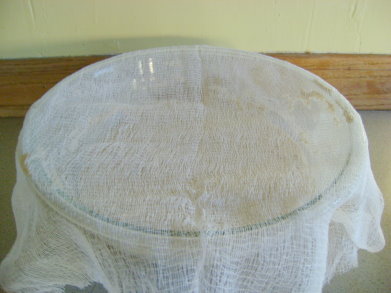
I layed a big piece of cheesecloth over my bowl without securing it with anything.
On Day 7…just do the very same thing by adding 1 cup of flour and enough cold water to make your starter as thick (less sour) or as thin (more sour) as you want. I may try to pop back in briefly if I feel like there’s anything important I need to tell you about the Day 7 process.
And GUESS WHAT?! On Monday we can make BREAD!!! Would it surprise you to hear that the only ingredients you need to have ready to go are more flour and water…and some salt? (I use Redmonds Real Sea Salt.)
Sourdough Starter: Day 5
Posted by: | CommentsWhoa-oa-oa! Get back! So much for the “sweetly sour” smell of my starter from yesterday morning.
Shew!
A few of you commented that your starter was NOT smelling sweetly sour…but more like…well none of you said exactly. Although Cindy’s husband said that it smells like some of the calls he goes on (he is a fireman/paramedic).
May I suggest a description something like a cross between a dirty gym socks and baby spit up? Okay…so sorry. DON’T let this discourage you from making sourdough!!!!! It gets better I promise! And…the sourdough bread doesn’t taste like the above mentioned descriptions. I PROMISE!
So…Day 5…if sniffing your sourdough starter makes you want to cough, gag, and run screaming from the room with tears running down your face…it’s doing exactly what it’s supposed to be doing. Good job creating a stinky masterpiece. :)
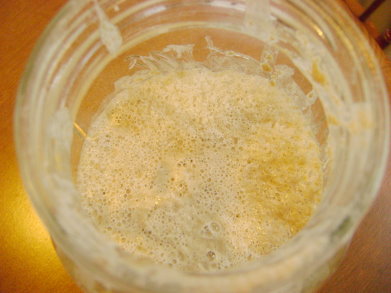
This morning a lot of liquid had risen to the top of my starter…and it had a frothy film on the top of the liquid. The froth was darker than yesterday and there was less of it. This is normal.


Elias saw this picture on my computer screen and said,
“Oh WEIRD…what IS that?”
Oh how I love posting weird pictures on my blog…
So…a note about stinky…SOUR…sourdough:
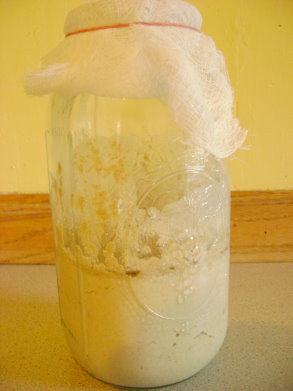
The more liquidy and soupy your sourdough starter is…the more sour it is going to be/taste. Some people like their sourdough to have a very strong taste. My family and I don’t prefer it quite so sour.
Since this is Day 5 and there are only two days left before I make bread from my starter (woohoo!)…I decided today to start making my starter a little thicker to help with the over-sourness factor.
This morning I added one cup of flour as normal…but only 1/4 cup of water. I also poured off most of the liquid that had risen to the top again before adding the flour/water. As I stirred in the flour/water…it all mixed in just fine and was by no means too thick to stir. So, depending on how thick or runny your starter is at this point, you may want to adjust the amount of water you add.
Several of you have asked if I would be sure to walk you through the sourdough bread making steps. ABSOLUTELY. I would NOT dare tell you how to make a sourdough starter and then leave you hanging about making the bread. It’s a tiny bit of a different process than making “yeast breads”…but it’s SO not hard to make. I’m getting so excited to finally be able to make my sourdough starter into bread! Yay!
So…anyone care to leave a description of how their sourdough is smelling by now?
Sourdough Starter: Day 4
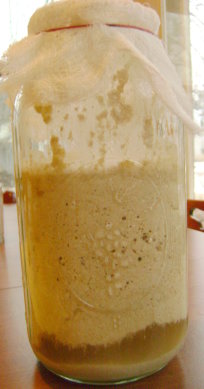
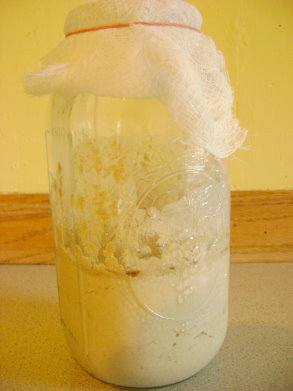
Posted by: | CommentsHere’s what my jar of starter looked like this morning.

It is so exciting! When I stirred my flour into it yesterday, it was right at halfway full. 24 hours later..it has risen at least an inch if not more! And there are bubbles all through it. And I have this nice layer of froth on top. Yep…the sourdough starter is starting to become sourdough.

You’ll notice in my top picture that I instead of the brown gooey liquid sitting on top of my starter like it had been on other days, it was at the bottom. I have no idea why…but it’s not a big deal. I just poured it all into a fresh jar just like that and it mixed back in.
Jen was wondering why we need to transfer to a clean jar or bowl each day. I don’t know! My resources (Nourishing Traditions book…and my own past experiences with sourdough…and my trusty sourdough making friend, Anne) just tell me to do it! I think the clean jar just gives your starter a fresh start as you feed it (or something like that?). If you just left it in the same container and just kept feeding it in that…all kinds of crud would build up on the sides and your jar would be all yucky. Then the sourdough would have to do it’s work around the yucky crud and it wouldn’t be as effective. Yes, I think that’s the reason why. :)
Okay, so again for Day 4…put your starter into a clean glass container, add a cup of flour and a cup of water, stir well, cover with cheesecloth and put in a warm place.
I’m pretty sure tomorrow I’m going to need to transfer mine to my big glass bowl. It’s getting BIG! Oh, and it smells even more like sourdough today…just slightly…but I can tell it’s working.
By the way…yours might not be doing the exact thing mine is. Yours is working in YOUR air and in YOUR climate. Yours might be working faster…or slower than some of ours are working.
I am curious what yours are looking like though. Did you have a layer of froth today? Do you see bubbles?!
I kinda want to describe my sourdough smell as “sweetly sour”. Does that make sense? What does yours smell like?
Just getting started? Here are our previous sourdough starter days!
Sourdough Starter: Day 3
Posted by: | CommentsRead Day 1 and Day 2 to catch up!
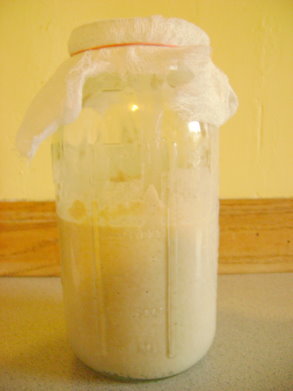
This morning I didn’t have as much dark liquid on top of my starter as I did yesterday. Here’s what my jar looked like:

Have you been sniffing your jar? I thought today mine smelled just a little tiny bit sour…just a little tiny bit.
Today…do just like you did yesterday: Pour off most of the liquid on top (I only had about a tablespoon today)…put your starter into a clean jar or glass bowl…add a cup of flour and a cup of water…stir it…replace the cheesecloth and put it back in it’s warm nest. Really, making sourdough takes no time at all. (Even including my jar sniffing time this process probably only took 2 minutes this morning.)
My jar is almost half full now…I may have to switch to a big glass bowl by the time these seven days are up!

And speaking of glass bowls…Jayme asked WHY it has to be glass? Can you use plastic bowls?
Sourdough should always be prepared in glass and baked in either glass or stoneware. Sourdough is acidic, therefore it will react with metal and plastic. It is very porous…so it will absorb the metalic or plastic-y tastes and qualities. For that matter…I try to always stir my sourdough with a wooden spoon.
So…go sniff your jar…feed your sourdough…and come report back to us here about how your sourdough is doing! :)
Because I wanted to keep Gratituesday at the top of my blog for today…I published Sourdough Starter: Day 2 UNDER it…please scroll down or click here to see your sourdough steps for day 2!
Sourdough Starter: Day 2
Posted by: | CommentsIn case you missed it…here is Sourdough Starter: Day 1.
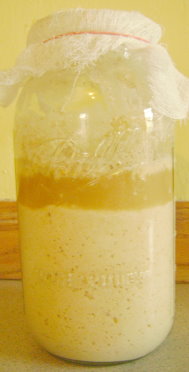
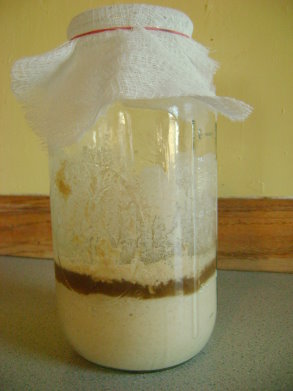
Here’s what my sourdough starter looked like after 24 hours. (It actually started separating and looking like this after only a few hours.)

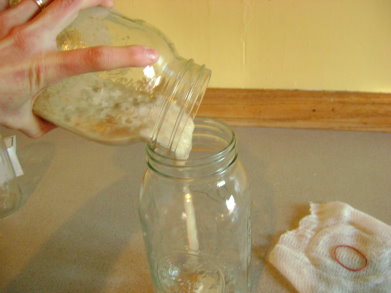
I poured off the dark liquid that had risen to the top. Then I poured my starter in to a fresh, clean jar.

Once you have your starter in a clean jar or bowl, add 1 cup of whole wheat flour and almost 1 cup of cold water. Stir the flour in very well so that it is all moistened.

Replace your cheese cloth and rubber band…then put it back in your warm spot for 24 more hours. (Is this easy or what?!)

We’ll be repeating these same steps over the next several days. You have probably not noticed anything exciting happening to your sourdough starter yet. Still looks and smells like flour and water. Oh, but just wait!
For tomorrow you’ll need a clean jar or glass bowl, 1 cup whole wheat or rye flour and about a cup of cold water.
Here are a couple of FAQ I’ve been hearing from you about sourdough making…
- Sourdough bread is best baked in either glass or stone bread pans. Thought I should tell you that today so that if possible you can round up glass or stone pans for baking your sourdough bread.
- Some of you have expressed concern over having large enough jars for this process. If you can’t find half gallon jars (Try Ace Hardware if you have one close by. I ordered mine from Azure Standard.)…just use large glass bowls. That will work fine for this seven day process. Then…after you make your first batch of sourdough bread, the rest of your starter will fit just fine in a quart sized jar.
Thanks for joining me making sourdough!!
Sourdough Starter: Day 1
Posted by: | CommentsWell, the joke was on me this time. Several of you emailed or left comments asking where you buy cheese cloth for making sourdough starter. I had ordered mine from Frontier a long time ago…so I really didn’t KNOW where to tell you to go buy some. I googled it and found that hardware stores carry it…and usually Walmart. In the paint department (weird).
Anyway…I was getting my supplies out last night so that I could start my starter in the morning…and guess what I was out of? CHEESE CLOTH. :)
I ran to my hardware store and grabbed some this morning (thanks to all of you who made me google it so that I would know where to get it!!). Oh and I asked the guy why it’s in the paint department and he said it is because some people strain their paint with it. I guess more people strain paint than make their own cheese or sourdough.
Okay…enough cheese cloth trivia. Let’s make sourdough.
For the first day you’ll need:
1 large jar or glass bowl (not metal…glass only)
2 cups whole wheat or rye flour (freshly ground if possible)
2 cups cold water (filtered is best)
Long spoon for stirring
Cheesecloth (of course)
rubberband
First, pour 2 cups of flour into the jar or bowl.
It doesn’t get much more exciting than looking at flour in a jar.
Next, stir in 2 cups of water. It should be mixed well and look soupy.
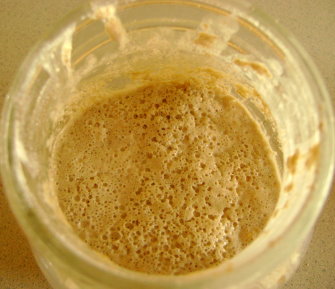
This is just a view from the top of the jar after I stirred the flour and water together. It’s pretty liquid-y. That’s just the way it’s supposed to be the first day.
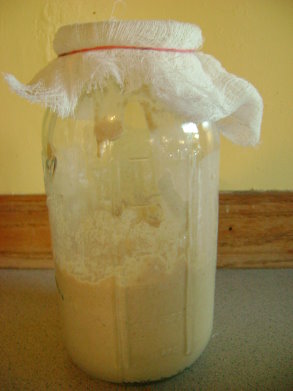
Cover the top of your jar or lid with cheesecloth. This will keep dust and bugs from getting in…but it will allow the yeast and bacteria from the air to get in and do it’s thing. Isn’t it COOL that there is natural yeast in the air?! And bacteria. Bacteria has a bad reputation. Not all bacteria is bad. There’s LOTS of GOOD bacteria hanging around. Poor bacteria. So misunderstood…
I usually attach my cheese cloth to the rim of my jar with a rubberband. If you’re using a large glass bowl, you might need to tie a string around it instead. Unless you have a gigantic rubberband hanging around. If you do, I’d like to see it.
Sourdough does best in a warm place. Unfortunately we’re starting this in January. There are no warm places in Nebraska in January. (Maybe there are warm places where you live?) If you do live in a warm place, you can put yours in a sunny spot or on your patio. I’m putting mine in the most consistently warm spot in my kitchen…the cabinet above my refrigerator.
See, there it is hanging out with my culturing buttermilk.
That’s all you do on day one.
For tomorrow you’ll need: a clean jar or glass bowl, 1 more cup of whole wheat or rye flour and one cup of water.
See you then!
—————————————————-
Visit Tammy’s Recipes for more kitchen know how!