Archive for Grains and Grain Mills
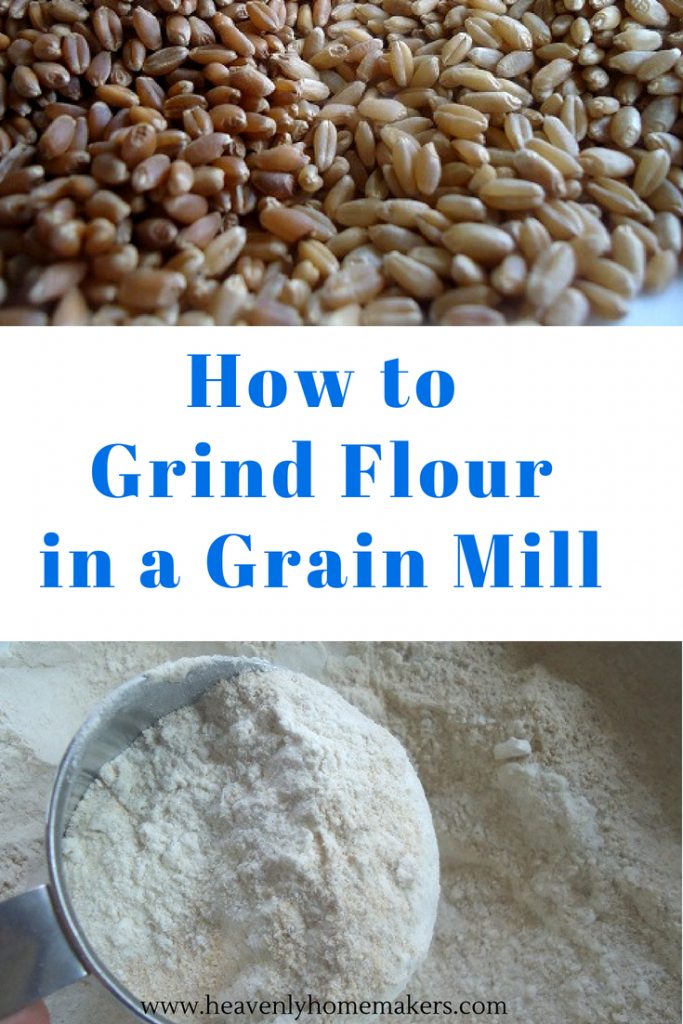
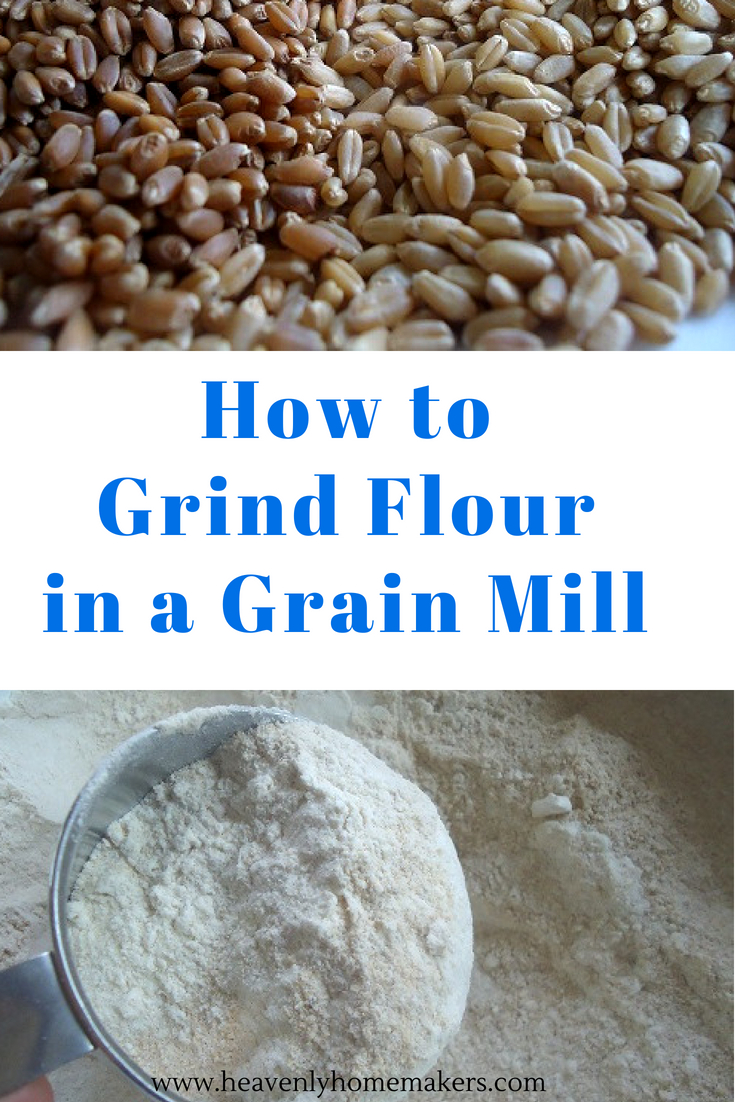
How to Grind Flour in a Grain Mill
Posted by: | Comments
Wanna see how easy it is to
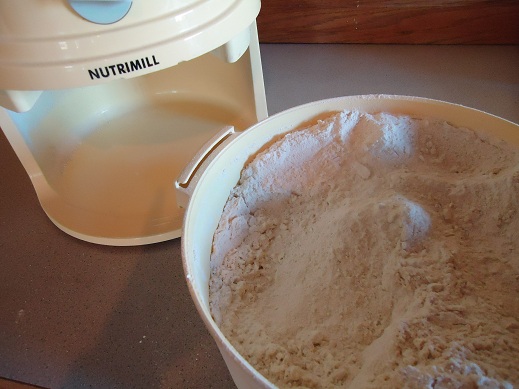
grind wheat into flour in a Nutrimill?
——————————————-
I’ve talked about how I love freshly ground flour and about how I love my nutrimill. You’ve all helped me share about great sources for organic or chemical free grains. I’ve even written a letter to your husbands trying to convince them that getting you a grain mill is a fabulous idea.
But I’ve never taken the time to show you how a grain mill works. Is it hard to run? Does it take a lot of time? Do you work up a sweat using it?
The answer to all three questions is a definite no!
So many people have mentioned to me things like “I don’t know how you have time to grind your own flour. I barely have time to cook, much less make the flour for my baked goods.”
You’re welcome to continue to think that because I grind my own flour, I am a modern day wonder woman. Or, you can watch this video clip and learn the truth…
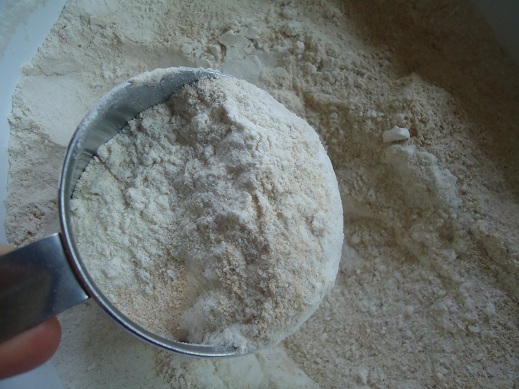
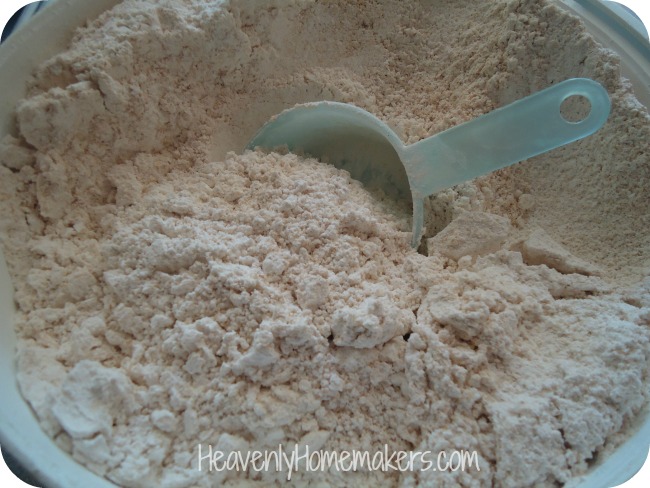
Did you see that? I put in the wheat, turned on the machine…and then I walked away and made lunch and did some dishes. Then I came back and had freshly ground flour. It doesn’t get any easier than that. And wow, this flour tastes more delicious than any you’ve ever had (in my opinion)!
I just noticed that Paula’s Bread has Nutrimills on sale right now! Paula’s fabulous to work with!
Any other questions about grain mills and how they work?
My Great Big Wheat Order
Posted by: | CommentsYou know that 500 pounds of wheat I had ordered? I picked it up yesterday. (And by picked it up, I literally mean that I picked-it-up. Lifted it. Fifty pounds at a time. Over and over.)
Actually…I picked up 1,000 pounds of wheat because my friend Anne went with me and she was also crazy enough to have ordered ten – 50 pound bags of wheat.
So there we were, heaving twenty – 50 pound bags of wheat into the back of my husband’s truck. We looked really cute. I’m sorry you missed it.
Matt and the boys weren’t home when we got back, so Anne and I got to lift them all over again while we carried them into our house (and then into her house).
Here are all twenty bags stacked in the back of the truck.
I had so much fun interviewing myself back on this post, I thought I’d interview myself again, based on any questions you might have concerning my 500 pounds of wheat:
Me: Wow, Laura. 500 pounds of wheat? Are you crazy?
Me again: Do you even have to ask?
Me: Why did you order 500 pounds of wheat?
Me again: Because I heard of a local gal ordering a big truck load of Wheat Montana. Apparently if you get enough people together to divide a truck load of their wheat, you can save a bunch of money. I usually order my wheat from Azure Standard, but sometimes it doesn’t come in. I never like running low on wheat. It’s not like I can just run to the store and get more, you know? So I ordered…a lot.
Me: So, what in the world are you going to do with all that wheat?
Me again: I grind my own flour and make from scratch all of our bread, tortillas, pancakes, waffles, bagels, cookies, brownies, quick breads and anything else that requires flour. I LOVE baking with freshly ground flour. It tastes incredible and is SO much healthier for us.
Me: How long will 500 pounds of wheat last you?
Me again: I’m thinking it should last about one year. I ordered 10 bags based on the fact that we go through almost 50 pounds each month.
Me: You go through almost 50 pounds of wheat in a MONTH?????
Me again: Well, there are six in our family. Five out of six are male. Four out of six eat like grown men. Plus, we have a LOT of company. Plus, I love to bake for others. Plus, we almost never buy any grain products from the store. Plus, no…that’s all.
Me: Will the wheat keep that long, or are you afraid it will go bad? Where are you storing it?
Me again: Wheat will keep for YEARS. As long as I keep it dry, it’ll be fine. I’m keeping it in a room that was once a garage, and is now just a storage room.
See? It doesn’t take up THAT much space.
Me: Can we see the rest of your storage room?
Me again: Are you kidding? That room is by far the scariest in my house. Nobody gets to go in there. They’d lose all respect for me if they saw that mess.
Me: How much did 500 pounds of wheat cost you?
Me again: I paid $210 for all of it. That makes it about 42 cents per pound. A great price for organic wheat!
Me: What kind of wheat did you get?
Me again: It came from Wheat Montana…and I ordered Hard White Wheat. I LOVE that stuff!!
Me: Why wasn’t Matt there to help you with all of that terrible, back breaking labor?
Me again: Oh, he offered. He actually had the day off when I needed to go pick it up. But, I really wanted him to have some time with the boys. Plus, I hadn’t spent time with my friend Anne for months. I kinda wanted the get-away. Besides, I’m much stronger than I look.
Me: No you’re not.
Me again: Okay, I’m not. But it really wasn’t that hard. I got a good workout.
Me: Will you keep us posted on how long the wheat lasts you and what all you’re making with it?
Me again: I’ll tell you more than you ever wanted to know.
Speaking of which…what else would you like to know?
The Promised Letter to Your Husbands about Why They Should Buy You a Grain Mill
Posted by: | CommentsDear Husbands of Heavenly Homemakers Readers,
First and foremost, let me tell you that you all have fantastic wives. They are among some of my most favorite people ever. Way to go and congratulations on choosing such a fine woman to be your help-meet.
And now I’d like to take a moment to encourage you to strongly consider purchasing a Grain Mill for your wife (for Christmas, or tomorrow would also be fine). I know how much she’d like one. I know how much she’d use it.
And the best news for you…I know how much you’d like the breads and other foods she’d make for you with the freshly ground flour her Grain Mill produces.
What? You don’t like whole wheat? I understand. But listen…the whole wheat flour that your wife’s new grain mill creates is like NONE other you have ever had. You’re likely to not even recognize that your bread is whole wheat. I promise.
Just think. After your wife serves you some hot homemade bread straight from the oven, she can experiment with other delicious whole wheat recipes like these whole wheat pretzels…whole wheat cinnamon rolls…whole wheat donuts…cinnamon swirl bread…
And while you think that you couldn’t possibly love your wife more than you do at this very minute…I think you will fall even more in love with her (even if she does have streaks of flour in her hair) after she bakes these delightful treats for you.
One of the best parts of owning a grain mill is how much MONEY it saves. Your wife knows how much you love to save your hard earned money. She’d be happy to use her new Grain Mill to help you save money.
Don’t know where to start looking for a Grain Mill or which Grain Mill to get? No problem. Just go read this. Don’t know where to buy the grain for your Grain Mill? Gotcha covered. Go read this.
Have more questions? Email my husband (coppinger6 at gmail dot com). He will tell you everything you need to know. He’s really, really happy that we got a Grain Mill. I think he also thinks I look cute with flour in my hair.
Or maybe he’s just used to it.
Sincerely,
Laura at Heavenly Homemakers
[print_link]
Grain Mills Pt. 3: What Grains to Use and Where to Find Them
Posted by: | CommentsIn this little Grain Mill Series, we’ve talked about whether or not you should buy a grain mill…and if so…which one should you get and where should you get it? Now we’ll talk about which grains to use and where you can find them!
Which Grain to Use:
- I try to find organic or chemical free grain.
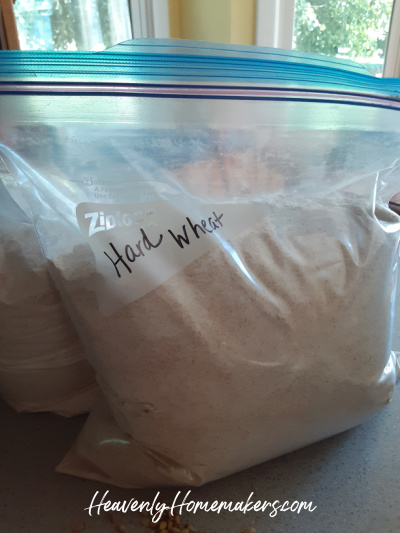
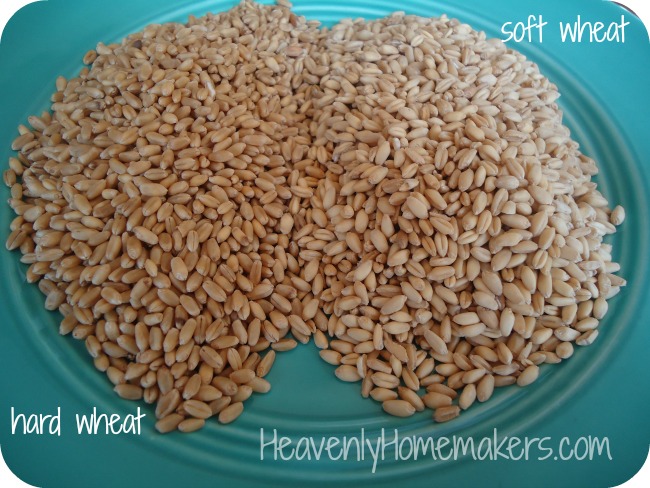
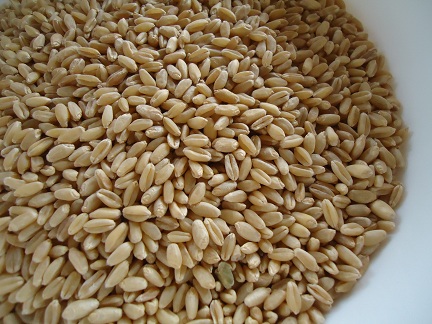
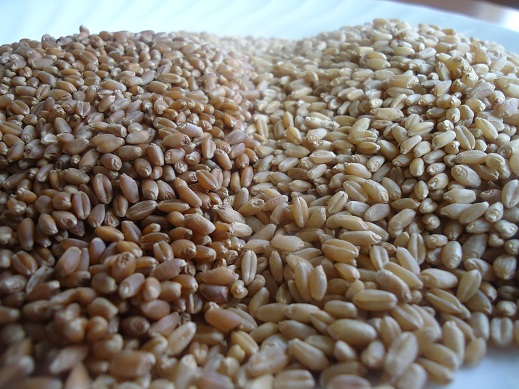
- My very favorite grain to use is Hard White Organic Wheat. I like it much better than Hard Red Wheat. It has the same nutritional value, but when you use hard white wheat, it hardly seems like you’re eating whole wheat at all! Hard red wheat seems to make my recipes a bit heavier.
- You can use Soft White Wheat to make pastry flour (for use in cookies and muffins) and Hard White Wheat for yeast breads. BUT I just use my hard white wheat for everything. It’s just simpler…I only have to have one kind of wheat on hand…and it just tastes good.
- I also love kamut and spelt…but don’t use them as much, usually because they cost a bit more.
- I grind my own corn into corn meal. This makes the BEST cornbread and cornbread muffins. I love freshly ground corn!
- You can grind rice and make rice flour if you like. It is actually recommended that you grind a cup or so of rice every few months through your mill just to clean it out! (I’ve GOT to remember to do that!)
Where to Find Good Quality Grains:
- First check around locally. Check out Local Harvest to find out if there is a good source of grains near you.
- I almost always order my wheat, corn and rice from Azure Standard. If you live in an area where there is an Azure Standard co-op delivery, I highly recommend purchasing this high quality grain from them. You can still order independently from Azure Standard, but shipping may be high.
- Paula’s Bread sells a few different varieties of grain on her site. She’ll ship it to you, or you can go pick it up if you live near her in Oklahoma.
- Pleasant Hill Grain happens to be right up the road from me!! I was excited to see the shipping is FREE on orders over $99!!!!
- Wheat Montana has great prices on wonderful wheat (I used to be able to get their wheat from Wal-mart for a great price). Shipping from their site is pretty pricey.
- Healthy Food Mall is worth checking into. Their costs are higher for the grain, but shipping seemed more reasonable.
- Don’t forget Amazon. I’ve never bought grain from them because shipping is high, but I keep checking there to see if there’s a reasonable option.
Grain will last for a long time. If you come upon a good resource for wheat, I say buy a LOT. It will store safely for years without going bad!
Okay everyone with a grain mill!! Share where buy your grain and where you live so that others in your area can learn from you!
———————————————–
This post is linked to Frugal Fridays.
Grain Mills Pt. 2: Which Ones Do I Recommend? Where Should You Buy One?
Posted by: | CommentsIf you missed the first post of this series where I try to convince you that you SHOULD buy a grain mill because it saves a lot of money and is more nutritious and all of your baked foods taste better, go here. For fewer run-on sentences…keep reading. :)
Now…IF you decide to invest in a grain mill…which one should you buy? There are all kinds of varieties out there. Here are a few that I know something about:
I have a Nutrimill.

I’ve never had a different kind of grain mill, so I don’t have much to compare it to…but I LOVE my Nutrimill. Everyone I’ve talked to that has one LOVES them. The only complaint I’ve ever heard about Nutrimills is that it is a bit hard to clean them. My answer to that is: Clean them?
While I do clean mine occasionally…I find it hardly worth the effort. I use mine almost daily and while I sort of wipe off the outside a bit after each use…I don’t find it necessary to thoroughly clean it very often. (Also, if you run rice through them occasionally, that will clean the inside!)
While the Nutrimill grinds the flour it does not heat the grain in the process, preserving all of the nutrients in the grain. I’ve ground wheat (hard and soft), spelt, kamut, buckwheat, rye, corn and rice with my Nutrimill. It does give the option of grinding at a finer or coarser setting…although I’ve never found that changing the setting makes much difference. My flour is usually quite fine and I love it.
A friend of mine has a Whisper Mill.

If you own a Whisper Mill maybe you can offer a different opinion about it, BUT my friend really DOESN’T like it. She says, “It takes up a LOT of space. The two pieces make it hard to store… you have to hook up the ‘bucket’ with a plastic arm that breaks easily. Mine has never ground anything bigger than wheat very well.” Anyone else have an opinion on the Whisper Mill?
If you have a Kitchen Aid Stand Mixer, you can purchase this attachment for it.

Any of you grind your flour this way?
I’m also very interested in investing in a hand grinder…just in case we would ever need to grind grain without electricity. Here’s one I’m looking at. Do any of you have experience with hand grinders and want to recommend one?

Several of you mentioned a Vitamix on this post.

Sounds like there are mixed reviews on this one. It seems that if you grind a large amount of flour, it takes too long in the Vitamix. On the other hand, you can do other things with the Vitamix, making it a more multi-purpose investment. Read the comments here if you’re interested in learning more about the Vitamix.
Where should I buy my Grain Mill?
I would recommend looking at your options of grain mills at Amazon (you can maybe even find a used one) OR check out Paula’s Bread.
Paula’s Bread has ALL kinds of great kitchen products and several varieties of grain mills. Read about Paula’s family here and consider supporting her business if you’re looking to purchase a grain mill! Her prices are very reasonable. I’m very impressed with all of the products she carries. (Side note: Paula’s Bread is a sponsor of mine, but she did not pay me anything extra to write this. I just really love her site and wanted to point you there in case you hadn’t seen her ad on my sidebar!)
————————————————-
If you have a grain mill, please share what kind you have and why you like it or dislike it!!!
————————————————–
This post is linked to Frugal Fridays.
Grain Mills Pt. 1: Should You Buy One? Does it Save Money?
Posted by: | CommentsI’ve been grinding my own flour for about four years now and I absolutely LOVE, LOVE, LOVE it!! I can’t say enough good about freshly ground whole grain flour. The taste is NOTHING like store bought whole wheat flour. The freshness is unbeatable. Because it is fresh, the nutritional value is much higher. I love my grain mill!

If you do a lot of baking and you want to bake with whole grains…I very much recommend saving up for a grain mill. (I sold baked goods at our farmer’s market one year to pay for mine!)
Here’s the investment payoff I calculated:
I have a Nutrimill, which cost me about $250…
I buy organic hard white wheat berries, 50 pounds for about $33.00, which lasts me about two months. I make all of our bread, tortillas, muffins, rolls, pretzels, crackers, cookies, cakes…everything that requires flour.
If I were to go to the store and buy the amount of bread and tortillas our family of six needs in two months, my rough calculating tells me that I would spend about $56.00. JUST ON BREAD AND TORTILLAS. That doesn’t include all the muffins and other grain products I make with my $33.00 bag of grain in two months.
AND…the products I bake are a bajillion (scientifically proven :) ) times healthier than what I can buy at the store.
Looking at those figures…it would seem that my grain mill paid for itself in about 10 months…although it’s really much less than that because again, my figures only included the cost of bread and tortillas and I get MANY MORE baked goods out of my bag of grain than just those (plus I was being conservative in my calculations).
So, I would say my grain mill paid for itself in about six months…and the savings just keep on keeping on! In fact, while I had my calculator out I figured out that I’ve saved approximately $552 in four years by grinding my own flour and baking whole grain food from scratch for my family. THAT was exciting to calculate!
There now. Would you like me to write a letter to your husbands, convincing them to buy you a grain mill for Christmas? I’d do it. :)
This post begins a short little series on Grain Mills and grinding and baking with whole grain flour. Coming up I’ll share about:
- Different kinds of grain mills, which ones I recommend and where to purchase them
- Where to buy grain and what kind to buy
- Tips on baking with whole grains
——————————————————–
This post is linked to Frugal Fridays.
More About Soaking Grains (or not)
Posted by: | CommentsThank you all for a wonderful discussion on this post and through emails about whether or not soaking our grains is necessary.
Talk about confusing. :)
After reading all of the comments, did any of you reach any conclusions?
I’m not sure if I’ve reached any definite conclusions, but I’ve been researching it more and talking with my husband about it.
I also decided to try emailing Sally Fallon, author of Nourishing Traditions. Guess what? She wrote me back!
Here’s the main part of my email to her:
Recently on my blog I posted about whether or not it is necessary to soak grains in order to break down the phytic acid and aid in digestion. There are differing ideas out there and I’d love to help my readers be well informed.
This is the post I wrote. Because of reading Nourishing Traditions, I’ve believe that it is important to soak my whole grain before cooking. However, I’ve never found any other
information that recommends soaking grains (aside from Dr. Mercola who simply recommends not eating them at all!). I even found an article suggesting that soaking is completely unnecessary.
And here is Sally’s reply:
Before yeast became available, the only way to make bread was by fermentation–sourdough fermentation. Also, if you look at Handbook of Indigenous Fermented Foods, you will see that the practice of fermenting grains–for breads, porridges and beverages–is practically universal.
Fermentation/Soaking not only neutralizes phytates (which DO block mineral uptake), but also tannins, enzyme inhibitors, etc, all things very irritating to the digestion. Also, there is recent research on gluten intolerance, showing that sourdough fermentation makes bread tolerable to those with celiac disease.
Personally, I get very sick if I consume unsoaked/unfermented whole grains, but do fine when they are properly prepared.
Best, Sally
I felt it interesting to note that some of you mentioned that healthier or not, soaking whole grains can help breads to have a nicer texture.
Here’s where I think I’ve landed on this issue:
As much as I can, I will soak my grains. I truly can tell a difference in the way my stomach responds. I love my soaked pancakes and waffles and biscuits. Soaking homemade tortillas is easy. Soaking my breakfast cookies and breakfast cake adds great flavor and isn’t any trouble. I’m working on perfecting my sourdough bread which is the most traditional way of baking bread.
But, if I don’t get around to soaking every single muffin or cookie, I’m not going to sweat it. It’s still whole grain (since I use freshly ground whole wheat flour) and it’s still better than white flour.
One thing I’m going to work on is simply not eating as many grains in the first place. Fruits, vegetables, grass fed meats and raw dairy give us more nutrition and should be more of a focus than grains in our diets.
I’d love to hear where you landed on this issue. What do you think will be best for your family?
Now, regarding all of this talk about grains, I’ve received TONS of emails asking me to recommend a grain mill. That post…coming up soon.
My Favorite Flower…I Mean Flour
Posted by: | CommentsI receive lots and lots of emails asking about my whole wheat flour. What kind do I use? Where do I get it? Is it course? Do my recipes turn out heavy from using 100% whole wheat? Do I grind my own grain? What kind of grain do I use?
I decided to tell you about my whole wheat flour preferences. (Some people have a favorite flower…I have my favorite flour. I’d say my husband has it made.)
My favorite flour is freshly ground from organic white wheat berries. I saved up and bought a “Nutrimill” about three years ago. Definitely one of my favorite kitchen tools. If you’re planning to “go whole wheat” I highly recommend investing in a grain mill so that you can grind your own flour. You will never find whole wheat flour as good as the kind that you grind yourself. IT IS SO GOOD. It is also healthier because it is fresher.
I prefer hard white wheat berries over red wheat berries. There is no nutritional difference…I just find that the white wheat berries make a nicer flour and create nicer, lighter loaves of bread and such. My Nutrimill grinds the flour nice and fine so my flour isn’t course or rough, like some might picture whole wheat flour.
I order my wheat berries from Azure Standard…usually 25 pounds a month. We don’t always go through that many pounds each month…but sometimes we do depending on how much baking I do. (25 pounds may sound like a lot of wheat…but we are a family of six big eaters…and I make everything from scratch. We can easily go through more than one loaf of bread at a time. No wonder I always have flour in my hair.)
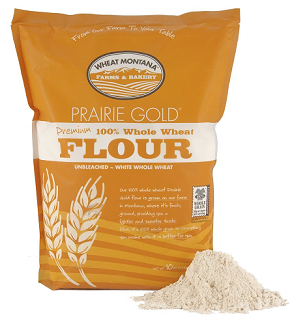
If you don’t have a grain mill…I recommend trying to find whole wheat flour made from white wheat berries. I’ve been happy to see the Montana brand of whole wheat flour at my Walmart ground from white wheat. Montana brand is also “chemical free”.
You need to store your flour in the fridge or freezer, especially your freshly ground flour. It has a tendency to go rancid quickly if you don’t.
Occasionally I use soft white wheat berries, instead of hard white wheat berries. (You know, occasionally, like when I accidentally order soft white instead of hard white?) I prefer hard white berries…but you can grind the soft white berries for making pancakes, waffles and muffins. For making bread, you need to use hard wheat berries.
What else?
Well, this doesn’t have to do with whole wheat flour…but I also use my Nutrimill to grind corn into cornmeal. Makes the best cornbread ever. And I’ve used it occasionally to grind rice when I want to experiment with rice flour just for fun.
What kind of flour do you prefer? Do you have a grain mill? What kind do you recommend? Do you also often have flour in your hair, or is it just me? I personally think it is a lovely accessory.
————————————————–
Visit Tammy’s Recipes for more kitchen tips.
Soaking Those Grains…What is THAT about?
Posted by: | CommentsI’ve had tons of emails lately asking if I soak my grains and how I do it and why I do it!
Most of the recipes on my site have not shown that I soak my grains. Mostly I did that because I know that many of my readers are just beginning to look into making changes toward healthy eating. I decided…if you are just starting out trying to switch over from fruit roll-ups to real fruit…from white flour to whole wheat…from boxed foods to foods made from scratch…it would be very discouraging to hear that you also should “prepare your grains 12-24 hours ahead of time by soaking them in something that is lacto-fermented in order to break down the phytic acid…”
It’s overwhelming enough sometimes just to try to get your kids to eat a green bean…and to wrap your brain around the fact that almost every food on the shelves that we might be used to eating has a no-no ingredient in it.
So, if you’re just starting out on the healthy eating trail…read over the information in this post and tuck it away for whenever or if ever you’re ready. Continue to take baby steps and make small changes. Read the Getting Real with Food series here to give you some basic ideas of where to start and what to do.
But, if you’re eating a lot of whole grains already and are used to baking from scratch anyway, and you want to take this nutrition thing one step farther…here’s some information for you about soaking grains that I am paraphrasing from Sally Fallon’s book “Nourishing Traditions”:
Eating whole grains is important because they provide vitamin E, B vitamins, many important minerals and fiber. But the phytic acid in the grain combines with the iron, calcium, magnesium, copper and zinc in the intestinal tract, blocking their absorption. They also contain enzyme inhibitors that can interfere with digestion.
So, Nourishing Traditions recommends that we soak our grains in either whey, cultured yogurt, kefir, cultured buttermilk…or in lemon juice or vinegar if you can’t tolerate milk products. Soaking them for at least seven hours allows the enzymes to break down and neutralize the phytic acid. Then, more of the good nutrients in the grain are released and all the good stuff is more readily absorbed in our systems and the grain is digested much more easily.
Okay…so quick re-cap. Eating whole grains is so, so much better for you than processed grains that have almost all of their nutrients stripped from them. Eating whole grains that have been soaked is even better.
How do I do this?
It’s really not hard…I just have to plan ahead a little more. And I don’t always soak everything even though I know I should. I try to just do the best I can. (That’s the goal right?)
So, here’s a quick run down of the basics of how I soak my grains when preparing recipes:
Pancakes and Waffles…I stir the whole wheat flour and the buttermilk together, cover it with a cloth and let it sit overnight. The next day, I add the remaining ingredients and cook the pancakes or waffles. They are SO YUMMY made like this!
Quick Breads and Muffins…I mix the flour with the butter (melted and cooled) or oil that the recipe calls for and add enough buttermilk to make it “soakable”. I let it sit overnight, then mix in the remaining ingredients.
Giant Breakfast Cookies and Breakfast Bars…I mix the melted butter, flour and oats with enough buttermilk to soak then let it sit overnight. I have found these to be VERY HARD to stir the next morning, so putting the soaked mixture into my food processor with the other ingredients so that it doesn’t take me 45 minutes (or until lunchtime) just to stir the silly things. Yea for food processors.
Tortillas…I mix up the tortillas as the recipes says, only I put in 1/4 cup less water and add 1/4 cup yogurt, kefir or buttermilk as I’m making the recipe. Then, I let them sit for the day, and roll them and cook them that night for dinner. They roll out so nicely after they’ve been soaked.
Breads, Rolls and Pretzels…These belong in the “I don’t soak these but I should” category. When I’m really on the ball, I make sourdough bread…but my sourdough starter isn’t starting anymore, so I need to get a new one going. In the meantime, I’m compromising and making Honey Whole Wheat Bread, and that’s okay with me. After I get my sourdough going again, I’ll post about it. Sourdough bread is so tasty!
Cookies and Brownies…I rarely soak these either, mostly because I’m lazy about it. When I do soak them, I mix the butter and flour called for in the recipe with a few tablespoons of buttermilk, kefir or yogurt…allow them to sit for a few hours, then add the remaining ingredients and bake.
I hope that helps. I’ll cover soaking other grains like rice and oats in the future. And, as I slowly but surely get around to it…I’ll go back through each of my site recipes and blog recipes and add a brief explanation of how to soak the grains if you choose to do so. That way, you have the option if you’d like!
And now, I think I’ll go grind me some flour and soak something. Because looking at all these recipes put me in the mood to bake.
(Like I’m ever not in the mood to bake?!) :)
——————————————
More Kitchen Tip Tuesdays here!