Archive for Eating Healthy

Feb
28

How to Warm Up Food Without a Microwave

Posted by: Laura | Comments (118)

Our family stopped using a microwave about six years ago when we began our healthy eating journey.  We still have a microwave, because it is a permanent fixture above my stove and would be a pain to take down.  Guests do use it occasionally, which means that I should probably actually clean it every once in a while.  But in general, I’ve pretty much forgotten that it exists.

Why do we not use a microwave?

I’d like to write an entire post about why you may want to consider avoiding the use of a microwave oven.  But I’m not a girl who uses big words or who can write informative sentences about the dangers of microwaves, imparting knowledge like, “The apparent additional energy exhibited by the luminescent bacteria was merely an extra confirmation.”  Shoot, not only can I not write a sentence like that, I can’t even read one and come away feeling like I have an actual working brain in my head.  Therefore, if you’d like to read all the big words and reasons for avoiding a microwave, I encourage you to check out all of the helpful information in this article.

Otherwise, in Laura’s simple and non-big-word language:  We don’t use a microwave because we think that it makes our food yucky.

The question I receive often then is:  How do you warm up leftovers if you don’t have a microwave?

Easy.  I warm up our food on either the stove-top, in our oven, or in our toaster oven.

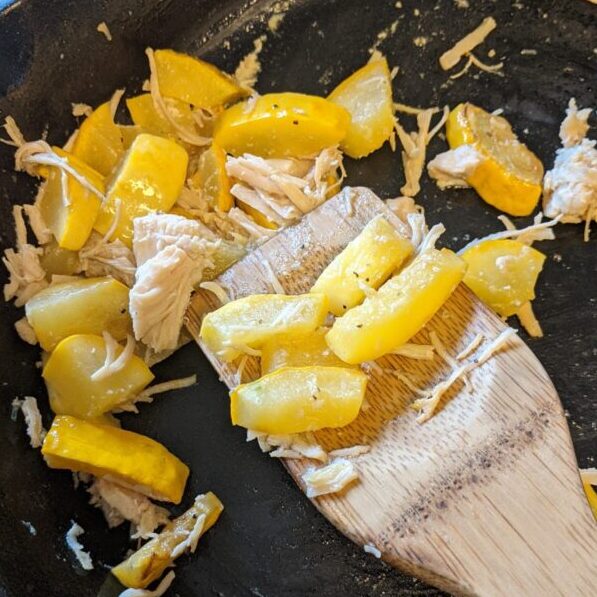
Pardon the fairly ugly picture, but really, how cute can leftovers in a saucepan actually be?!  ;)

I usually add just a shot of water to the saucepan with our leftovers to keep the food from sticking.  I have also found that it is a good idea to keep the heat at a medium setting and to stir often.  If I’m rewarming Creamy Mac and Cheese or something else milk based, instead of adding a shot of water, I will add a shot of milk, which keeps the food creamy!

To warm up Pizza, Taco Corn Fritters, Popcorn Chicken, or Burritos and such, I’ll use our oven or toaster oven.  We LOVE our toaster oven!  We pop the food in, put it on “toast” or “bake” depending on what we want, walk away and do something else for a few minutes, then our food is perfect.

toaster oven

While a microwave might take one minute to warm up your food, I’d say the stovetop takes about two minutes.  A toaster oven might take five.  Those few extra minutes really don’t hurt my feelings very much.  It’s not so hard to wait.  My food tastes better rewarmed this way, plus I don’t have to worry about it losing it’s nutritional quality.  Those are a few extra minutes well spent.

What are your thoughts about using a microwave?  How do you warm up leftovers?

If you're new to Heavenly Homemakers, you may want to subscribe to receive free updates through RSS feed or by Email. Thanks for visiting!

Print
Comments (118)

As we reach the end of this Real Food – Low Cost Challenge, I have concluded that if you are ever wondering if you’re spending too much on healthy food - do a price break down.  It’s a bit of a headache.  It might make you a little crazy (or maybe that was just me having issues).  But the effort is worth it.  To learn that most of my real food recipes can be prepared for an average of $1.00 per person – that was very encouraging to me!

To finish up the cost break down on the remaining items on the challenge list, I’ll let you know that Italian Pasta Bake costs about $8.85 to make, breaking down to $1.48/person in my family.

Cheddar Ranch Burgers came in at $11.93 for eight burgers – $1.49 per burger.  Not super cheap, but made with the finest ingredients and very filling.  Throw some veggies in and we’ve got a complete meal for around $2.00 a person.

But enough about my recipes and the costs that come with them.  I’ve been very anxious for today to come so that you would have an opportunity to share some of your favorite real food recipes that are low in cost.  Help me prove that eating healthy does not have to be expensive!!!

If you have a blog, and have some Real Food – Low Cost recipes to share with us, link them up with us here.  Be sure to link back to this post so that your readers know where to find more healthy recipes!  If you don’t have a blog, please feel free to post your recipes in the comments section of this post.  If you care to share the cost break down of your recipes – even better!

Let the Real Food – Low Cost Challenge Recipe Sharing begin!

Print
Categories : Eating Healthy
Comments (13)

Beware - while reading this post, you will notice that I jump all over the place without making my paragraphs flow together and really without pausing to take a breath in between thoughts.  All this exercise I’m doing is either giving me a crazy amount of extra energy, or perhaps it is just simply making me crazy.  Or maybe it’s a little bit of both.

While breaking down the cost of my real food recipes, I have definitely learned that our breakfast time meals tend to be very, very inexpensive.  We can often eat for around $0.50 per person at breakfast, making it easier to spend a little more for our lunches and dinners.

It is kind of funny to me that I break the food cost down per person in my household, when clearly, we don’t actually all eat the same amount of food.  I would have to say that Malachi (our youngest at age seven) and I (the oldest at age 38) eat the smallest portions of food these days.  Therefore, maybe Malachi and I can eat breakfast for $0.20 and everyone else eats for $0.70?  Eh, never mind.  I don’t feel like getting that technical.  We’ll just keep it at an average $0.50/person for breakfast.  I’m pretty sure I don’t want to know how much it costs to feed my soccer playing, basketball playing teenager right now.  ;)

So check it out – my Homemade Poptarts cost $3.13 for one batch.  I figured that if one batch of homemade poptarts makes about 20 poptarts, that means the cost is around $0.16 per poptart.  I haven’t purchased poptarts at the store for a long time, but I’m pretty sure I’m not only feeding my family a much healthier poptart, but I’m saving money too.  Sixteen cents for a poptart made with real food ingredients?  How about that?

Who is it that said that eating healthy food is expensive??? (Oh yes, that was me a few years ago.)

I should have become a real food calculating geek years ago.  This is fun!!

(Pausing for breath.  Does reading this post make anyone else tired, or is it just me?  And here we go again…)

My Warm Vanilla Soother recipe breaks down to $2.87 per batch.  This really only makes about four servings though, so the cost per person is $0.72.  Not bad at all for a mug of hot, steamy, delicious, nourishing comfort.  I mean really, can you put a price on comfort?  No I don’t think so.  But just think about the cost of a hot drink of non-nourishment at your local coffee shop.  Pretty sure you can’t get that for $0.72, am I right?

And speaking of coffee – because it does appear that all the exercise I’m getting these days is indeed giving me extra energy - I believe it is wise for me to stay away from drinking coffee very often, even if I did enjoy my one cup of coffee with real Chocolate Caramel Cream.  I don’t think giving me additional energy from caffeine is really a good idea right now?  What do you think?!

Make plans to join us tomorrow for a Real Food – Low Cost Link-Up!  Get ready to share your real food, low cost recipes.  Cant’ wait to learn about your tried and true family favorites that are easy on the budget!

Print
Categories : Eating Healthy
Comments (35)

It is high time someone stood up and said a word on behalf of the free range chickens.  I mean, if I don’t say something, who will?  The birds can’t speak for themselves, you know?  Bless their little chicken hearts.

Ok, real quick - I’ll interrupt this crazy chicken rant to let you know that it would seem that the Real Food – Low Cost Challenge has sent me over the edge to the land of insanity.  You know me well enough to have guessed that this was likely to happen some day soon, and probably saw that the end was near when I was struggling so much last week in my effort to figure out the cost of a (stinkin’) cup of whole wheat flour.

But back to the speechless chickens, and my determination to see that they are no longer misunderstood.

I currently pay $12.50 for one free range chicken.  Twelve dollars and 50 cents.  Many people think that’s a crazy amount to spend on a chicken when I could instead go the store and grab a whole chicken for $3-$5.

But, I hold firm to the belief that my chickens are not expensive.  The chickens I buy are very large – usually around five or six pounds each.  In fact, I always, without skimping, get at least four meals out of my chickens, if not six.  Read here about how I can stretch a chicken to get six meals.  Therefore, my one $12.50 investment in chicken costs me, at the most, only $3.13 for a nice amount of meat/broth per meal.

Based on this figure, and on the fact that making homemade whole wheat noodles is also very low in cost, I was thrilled to learn today that I can make a big pot of Chicken Noodle Soup for only $4.03.  Four dollars and three cents!!!!!  This, for one of the most nutritious meals on the face of the earth.  That is $0.67 per family member at my house.   Doesn’t that just make you want to stand up and do the chicken dance?

Well, doesn’t it?!

Okay, me neither.  But still, I’m pretty excited.  In addition, I learned that a batch of Easy Noodle Stir Fry costs about $8.53, which breaks down to $1.42 per person.

I’m thinking that I need to make chicken meals more often since I’m able to pull them together for such a low cost.  It is amazing what all I’ve been learning as I’ve broken down the cost of our favorite, real food meals.

So, tell me about the chickens where you’re from.  Have you found a good price for a good chicken?  Are you able to find free range chickens where you live?  How big are your chickens?

I tell you what, nothing beats a good discussion about poultry.  ;)

Print
Categories : Eating Healthy
Comments (48)

How silly of me to go on and on in my last post about the difficulty I had in figuring out how many pounds of wheat make how many cups of flour – and then fail to share the nitty gritty info with you!  I had it totally figured wrong, by the way, and plan to post more details soon about how to convert pounds of wheat to cups of flour.  But, as far as I can tell:  One Pound of Wheat (unground) = Three Cups of Flour.   So there you go.  You will sleep so much better tonight now that you know that information.

Oh, and in case you’re interested in another piece of random information that may or may not help you to sleep better, I have also learned this week that when I walk for several miles at a time, my hands swell up really big because of circulation and gravity and also because of something with the blood flow to the lower extremities and how veins do something or other while I’m walking which causes my fingers to turn fat.  Did I mention that my walking buddy is not only a coach, but also has a degree in biology?  Yes, I have learned all kinds of interesting information on these walks.

But moving on to some more Real Food – Low Cost calculations, which is the actual reason, I believe, that you have stuck with me through this post so far…

This morning I made a loaf of Applesauce Bread, which is super easy and makes the house smell awesome.  I calculated that this loaf cost me $1.65 to make, which is more than I expected.  Whole wheat flour, raw organic honey, two farm fresh eggs, butter – it all adds up I guess.  However, this makes for a very low cost breakfast when served with milk and fruit.  So, I’d say it’s a $1.65 well spent.

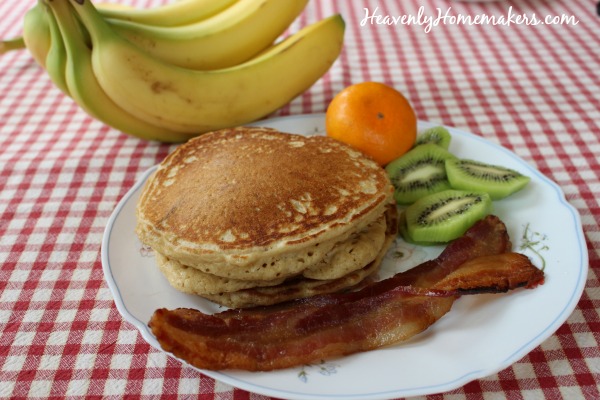
While I don’t have a lovely stack of pancakes pictured for you, I also calculated how much it costs to feed my family Whole Wheat Pancakes for breakfast.  I always make a triple batch of this recipe, and the six of us typically finish most of the pancakes off.  Total cost for this meal:  $5.22 – which includes the real maple syrup we use on our pancakes.  Add an additional $1.50 for the milk we’ll drink with these pancakes, and maybe $2.00 for eggs if I make those, and then we’re talking $8.72  for a full meal, which is $1.45 per person.

I don’t know what you’re finding in your calculations, but I’m not finding that eating real food is adding up to being very expensive.  I’ve still got several more recipes to experiment with though, so stay tuned!

Oh, and in case you’re wondering, my fingers only stay fat for a few minutes after we’re done exercising.  This is why, now that I’m typing, I’m actually able to hit the correct keys…mostly.  I’m sure you were worried.  ;)

Any fun calculations you’d like to share?  Ever experienced “fat finger syndrome” while taking a long walk?

Print
Categories : Eating Healthy
Comments (49)

If you recall, during the next few days, I will be making some of my family’s favorite, healthy meals – then breaking down the cost of each to see how expensive (or not expensive) it really is to make these healthy foods.

I had no idea, when I took on this challenge, how much I’d have to stretch my brain.  I mean, here I sit with my laptop, a notebook and pen, a calculator, and several webites pulled up online so that I can reference prices I’ve paid for food.  I’ve also got a pile of receipts, several invoices, a water bottle, and a little bit of a crick in my neck.  Where is the chocolate when I need it?  (I don’t have any scientific research to back it up, but I often find that chocolate helps with brain function and grocery break-down calculations.)

Not to worry though, my brain and I have this experiment well under control by now, even without the chocolate.  It’s just that some of the calculations were a little more complicated than others.

For instance, in order to figure out the cost for one cup of freshly ground flour – I need to first figure how much one pound of wheat costs, then figure out how many cups of wheat make one cup of flour, then figure out the cost of a cup of flour, and then add up the number of cups of flour in each recipe.  Some of you math majors might not find that hard, but I have creases in my forehead right now and a very confused look on my face that I’m trying hard to disguise.

Ah, but I did figure it out.  I am happy to report that, as near as I can calculate, one cup of organic, freshly ground whole wheat flour costs me $0.13.  Yes indeed.  Now that I’ve figured out this information, there should be no limit to the recipe break-down calculations I can do.  Unless of course the recipe I’m making doesn’t call for flour and I instead need to figure the cost of say, a potato.

I’m getting this thing figured out though – don’t you worry.  The cost for a cup of sucanat?  The price I pay for a wedge of cheese?  I’m all over it.  But if I come up missing at any time during this challenge, I’d suggest the first place you look might be in my office under all the papers and notes I’ve scratched out, where I will likely be nursing some paper cuts and mumbling incoherently about cups and ounces and most likely, potatoes.

Speaking of which, first up – the Taco Potato break-down.  As near as I can figure, it cost me a total of $9.48 for our Taco Potato meal on Sunday.  This amount fed eight people, which breaks down to $1.19 per person.  I love that this is a complete, well rounded, filling meal.  I would definitely call this a Real Food – Low Cost Meal!

Next, I calculated the cost of my Homemade Pizza.  This recipe is a little pricier to make, and in fact, is not a whole lot cheaper than grabbing some take-and-bake pizzas from Walmart.  However, since I went all out on the pizza this time, adding homemade pepperoni, lots of raw white cheddar cheese, mushrooms, peppers from our garden, and olives -  I didn’t feel like $9.00/pizza was a terrible price.  Especially since most of the ingredients were organic and the crust was made from freshly ground whole wheat flour (which cost me precisely $0.13/cup – just in case you forgot).  Cost per person on the pizza:  $2.25 – and everyone was stuffed.  More expensive than Taco Potatoes, but still not too bad, especially since I only make pizza once every three weeks or so.


There are all kinds of recipes left on the Real Food – Low Cost Challenge list for me to break-down.  But hey, once you know the cost of a potato, you’ve pretty much got life made.  (If only.)

Have you joined the challenge?  Done any real food price break-downs you’d like to share?  Do you know how much one potato costs?  Yeah, good luck with that. :)

Print
Categories : Eating Healthy
Comments (26)

I’ve decided to do things just a little bit differently during the next few days, just for kicks.  :)  Since most of last week’s posts were discussing the expense of eating healthy, whole foods - let’s do a little experimenting, putting some healthy recipes to the test.  An “expense test”.

Instead of planning a full menu for this week, I have instead made a list of a few of our family’s favorite recipes – recipes that you’ll find regularly on our weekly menu plans.  Throughout the next several days, I will be making each of these recipes.  Then, I’ll pull out the calculator and do a price break-down to determine just how much it costs to make these healthy foods.  I will post frequent updates, sharing the results I’ve found.  I’m excited to see which of my recipes might be most costly to make, and which ones might be less expensive.  This is not something I’ve ever done before, so I’m pretty excited about this experiment!

Now of course, I can’t help but want to challenge you to get involved in this experiment too.  You knew that was coming, right?  :)

I’d love for you to also take some of your family’s favorite healthy, real food recipes and do a little cost break-down on them.  You might just be surprised at what you discover!  Keep on the look-out, because throughout this challenge, I have a few fun surprises in store as we put these recipes to the test.  Then mark your calendar, because on Thursday, February 9, we’ll all come together with a special Real Food – Low Cost Link-Up, so that you can also share with us some of your family’s favorite real food, low cost recipes.

Here are the recipes I plan to do a price break-down on during this experiment:

~ Applesauce Bread

~ Simple Soaked Pancakes

~ Homemade Poptarts

~ Warm Vanilla Soother

~ Chicken And Noodles

~ Homemade Pizza

~ Italian Pasta Bake

~ Cheddar Ranch Burgers

~ Taco Potatoes

~ Easy Noodle Stir Fry

Be watching for lots of fun updates detailing what I’ve discovered about the specific costs of our food.  You can, at any time during those posts, share some of your discoveries too.

Sound like fun?  Let the challenge begin!

Print
Comments (20)

As we dive into our No More Excuses series, I decided to first tackle the excuse that it is “expensive to eat healthy food”.  This one seems to be the most popular complaint among those of us who are working to eat and feed our families a healthy diet.  I ended up with so much to say on this topic, I divided the material into three separate posts that I will be sharing throughout the week.

To begin part one of these posts regarding the thought that “healthy food is too expensive”, let me just start out by saying, “I hear ya!”.  That was my biggest complaint too, my loudest excuse, and one of the main reasons I didn’t think eating a healthy diet was possible for our family.  After all, I’m the girl who used to get everything for free or cheap with coupons.  The thought of actually spending money on food was painful to me when we started our healthy eating journey.  I had no idea where the extra money for healthy food would come from in our already very tight budget.

After lots and lots of research, experimentation, and tweaking of our budget, we finally figured out how to make this work for our family.  Ultimately, I had to surrender and let go of the idea that spending money on food was bad, and instead embrace the truth that spending money on good, nourishing food is a wise investment for our family.

But still, it is a fact that coconut oil and olive oil cost more than canola oil and crisco.  Real butter costs more than margarine.  Whole wheat pasta and real cheese costs more than a box of mac and cheese.

So, does that mean that healthy eating is indeed expensive?  I think it’s a matter of perspective.  Our grocery budget has definitely gone up since we began our healthy eating journey.  The way I cook now is completely different than the way I cooked when I bought processed and unhealthy foods with coupons, but does that mean that our healthy food should be considered expensive?

Pardon my geekiness spewing forth, but just as I did a few years ago, I did a new break down of what it costs to feed my family on an average day.  I think it’s very interesting to take a nitty-gritty look at what it costs us to feed one person per day, and to analyze that number to see if in fact I could or should cut back our budget in any way.

We currently spend about $600/month on food.  Because there are six in our family, this means that we spend about $100/person/month.  This divides into an average of $3.33/day/person, which means that it costs about $1.11 per person per meal.

I don’t think $1.11/meal/person is very expensive, but that’s just my opinion, and as I said earlier, it is a matter of perspective.

As always, remember that there is no comparing or guilt allowed. If you spend more than $1.11 per meal per person – great!  If you spend less than that – great!  If you could come help me clean my house – great!  Oh wait, sorry.  I got carried away there for a second.  ;)

Above all, we all need to remember that we are all humble people, working to do the best we can with what we have.  I feel like there’s a lot left unsaid in this post regarding the expense of healthy food, so stay tuned!  In part two of this mini series on Wednesday, I’ll share thoughts on the following three points:

1)Transitioning to Healthy Eating is a Process.  2) There’s Not a “One Size Fits All” Plan for Eating Healthy. 3) God is in Control and He Knows Your Heart

Then, I’ll wrap up the week by sharing some practical ways to eat a healthy, whole foods diet while keeping your costs low.

For today, I’d love to hear a little about your grocery budget break-down.  Join my geekiness and do the math.  If you care to share, how much do you estimate that it costs to feed one person in your household for each meal?

If you’re concerned that you may be spending too much on food,
I’d encourage you to read this post:  Do You Need to Cut the Grocery Budget?

I’d also like to encourage you to check out Once a Month Mom’s Get Real 2012!

Print
Comments (118)

This is a guest post written by Crystal Paine, from Money Saving Mom. Be sure not to miss our giveaway below this post for Crystal’s new book The Money Saving Mom®‘s Budget.

Many people have this misguided idea that it is impossible to feed your family a whole foods on a budget. If you live in Alaska or some remote part of the country, this may be the case, but in most areas, you can feed your family natural, unprocessed foods without spending hundreds of dollars each week to do so.

Sure, you might spend a little bit more than someone who is eating a diet composed mostly of processed foods, but it really doesn’t have to cost you an arm and a leg as some people will make you
think–especially if you’re willing to get creative and think outside the box.

Now, let me be upfront and tell you that our weekly meal plans probably wouldn’t win us the Healthiest Family of the Year award. We eat some processed foods (though we do make the majority of our food from scratch), we like sweets and we certainly do not eat 100% organic.

I know some people are really bothered by this, but we strive to have a balance of serving lots of fresh fruits, veggies and whole grains while still enjoying the occasional brownies and ice cream or even letting our children have a Happy Meal every now and then (gasp! Can you believe it?!)

So, despite the fact that I’m not the most knowledgeable and experienced person to be tackling this issue, here are some suggestions:

1. Plan a Menu Based Upon What is In Season and On Sale

If you want to feed your family on a budget, you need to have a plan for what you’ll be eating. If you can make your menu plan mostly based upon what is on sale at the natural foods store, what is in season at the Farmer’s Market and/or what you’re reaping in abundance from your garden, you’re going to significantly reduce your grocery bill.

2. Practice the “Buy Ahead” Principle

If you happen to come upon an incredible sale on tomatoes at the Farmer’s Market, or the health food store has organic frozen vegetables on a great sale, stock up. Buying items you routinely use when
they are at their lowest price is another surefire way to savings.

3. Plant a Garden (Or Barter With Someone Who Does!)

If you can pull it off, plant a garden.  Produce is typically only pennies per item from your own backyard, it’s tremendously fresh and you know exactly what you did or didn’t spray on it.  Plus, you can can or freeze your extras–or bless your friends and neighbors with them!

Have a brown thumb? Find a friend who loves gardening and trade services (babysitting, breadbaking, car maintenance?) in exchange for their garden excess.

4. Stick With Simple Meals Using Inexpensive Ingredients

When you’re planning your menu, think about how much your recipes will cost you to make. It doesn’t have to be a scientific to-the-penny figure, but just having a good idea that there is a $10 difference between the price of making one meal as opposed to another meal can help you decide whether you can afford to make something or perhaps should save it for a special occasion.

5. Serve Meat as a Condiment

I shamelessly stole this idea from Family Feasts for $75 Per Week because it’s so brilliant. Serving meat in soup or on pizza is going to be a lot less expensive than serving roast and sirloin,
especially if you’re buying high-quality meat.

Need ideas? Laura shows you how to make six meals out of one chicken.

6. Buy in Bulk

It is usually much more cost-effective to purchase meat and staple ingredients in bulk. Call around to local farmers and see what they would charge you for purchasing half a cow. In many cases, it’s at
least $1 cheaper per pound to purchase in bulk. Buying grains, beans, as well as many other basic ingredients with long storage lives in large quantities will almost always save you at least 20%, if not more.

Costco, as well as many bulk foods stores and local co-ops, offer great pricing. You can also check with your local health food store to see if they’d offer you a discount for bulk purchases.

7. Consider Joining a CSA or Co-Op

If there is a co-op or CSA in your area, check into pricing and details for joining. You might find that it is an affordable and money-saving option for your family. If you can’t find an affordable co-op in your area, you could consider starting your own co-op.

8. Use Coupons on Non-Food Items

I know a number of my readers don’t eat processed foods, but they use coupons to save money on toilet paper, toothbrushes and other non-food items which they purchase. Your savings might not be so exciting as others who use dozens of coupons each shopping trip, but even saving $5 each week by using coupons can start to add up over time.

Crystal Paine is a wife, homeschool mom to three, self-proclaimed minimalist, lover of dark chocolate and good coffee (those can be “healthful” in moderation, right?) and wannabe runner. For practical help and inspiration to get your life and finances in order, check out her blog, MoneySavingMom or purchase a copy of her brand-new book, The Money Saving Mom®‘s Budget.

Interested in winning a copy of Crystal’s new book, The Money Saving Mom®‘s Budget? They’ve offered to give away five copies!  Leave a comment on this post for a chance to win.  I’ll draw five random winners on Monday, January 16. Please watch for a post stating the winner as you will be responsible for contacting me if your name is chosen!

Print
Categories : Eating Healthy
Comments (1,063)

menuplanner1webI love planning a menu for my family.  Without a menu plan, it takes me way too long to figure out what we’re eating each day.  I also like sharing my menu plan with all of you each week.  Many of you have mentioned how helpful you find my plan and have told me that you often “steal” many of my meal ideas.  I love that!

But, I also really appreciate the perspective shared in a comment last week – the perspective that my menu plan may be overwhelming to some of you.  The fact that I plan all three meals for each day of the week, and the fact that all three meals tend to be big meals – yep, I can definitely see how that could be overwhelming!

I decided to take the time to explain my menu plans just a little bit.  I certainly don’t want to overwhelm anyone, nor do I think that planning all three meals for every day of the week is a necessity for everyone.  It’s what works for me, but I know it doesn’t work that way for everyone.  In fact, menu planning doesn’t work at all for some people.  If you’re good at winging it at meal time - go for it!  :)

I have found that planning all three meals each day for our family works well for me for the following reasons:

1.  My family eats a boat load of food, for every meal.   Having a plan for which boat load of food is going on the table really helps me keep my head above water.  (Get it?  Boat load?  Head above water?  Ha.)

2.  Having a plan in place for each meal of the day helps me focus on other things so that I’m not constantly distracted by what I’m supposed to feed us next.  Trust me, the boys ask all the time – “What are we eating for breakfast/lunch/dinner?”

3.  Most of my boys wake up ready to eat my leg if I don’t have breakfast ready to offer them when they wake up.  I need to know what I’m making for breakfast before I get out of bed.  I like having two legs.  It’s very handy.

So the question could still be then:  Why don’t I just feed my family cereal for breakfast and sandwiches for lunch each day, and then focus on our evening meal plan?

Well…I do feed them cereal and sandwiches every once in a while.  But wow, the cost of feeding us this type of meal really adds up for us.  I did the math one time on how much it costs to feed my family sandwiches.  You can read about that here, but add even more to that dollar amount because we now eat probably double what I added up for a meal since my boys are older.  (Did I mention that my oldest son has jumped several shoe sizes during the last year?)  Therefore, I find that it really saves our family a lot of money if I cook heartier, more nutrition packed meals if possible.

Some tricks I use to make putting three big meals on the table each day just a little bit easier:

~ Just about every meal I make for my family is simple – especially our breakfast and lunchtime meals.  I really don’t find that making a “bigger” lunch for the family takes a whole lot more time than making a bunch of sandwiches.

~ Sometimes we have leftovers to eat, so I don’t have to cook something new.  But I don’t always know when we’ll have them, so it’s hard for me to plan those into my menus.

~ I try to have food made and in the freezer to pull out for quick lunches.

~ I have a list of “back up meals” and all ingredients on hand to throw them together if needed.

~ While I do have a detailed menu plan, I switch it up all over the place throughout the week depending on what’s going on and what sounds good.  The plan is there, but it is flexible.

~ I give myself grace.  If I really just can’t get a good meal on the table, the cereal is in the background waiting to be pulled out.

For a little bit more information on this subject, sure to read my Cooking Healthy Meals When the Menu Plan Fails post.  Also, you’ll find a free downloadable page full of healthy, easy lunch ideas here.
Okay everyone.  Jump in here with your ideas and thoughts about making menu planning simpler.  What do you do about planning breakfast and lunchtime meals?

Print
Comments (75)